Top Stainless Steel Wire Rope Supplier for 2026 Needs?
As industries evolve, the demand for reliable materials grows. One such vital component is stainless steel wire rope. Experts in the field, like Dr. Alice Thompson, note the ever-increasing importance of quality suppliers in this domain. “The right stainless steel wire rope can make or break a project,” she asserts.
This year, choosing the top stainless steel wire rope supplier is essential for various applications. From construction to maritime, the challenges are numerous. Quality varies significantly, and not every supplier meets industry standards. Thus, understanding the available options is crucial.
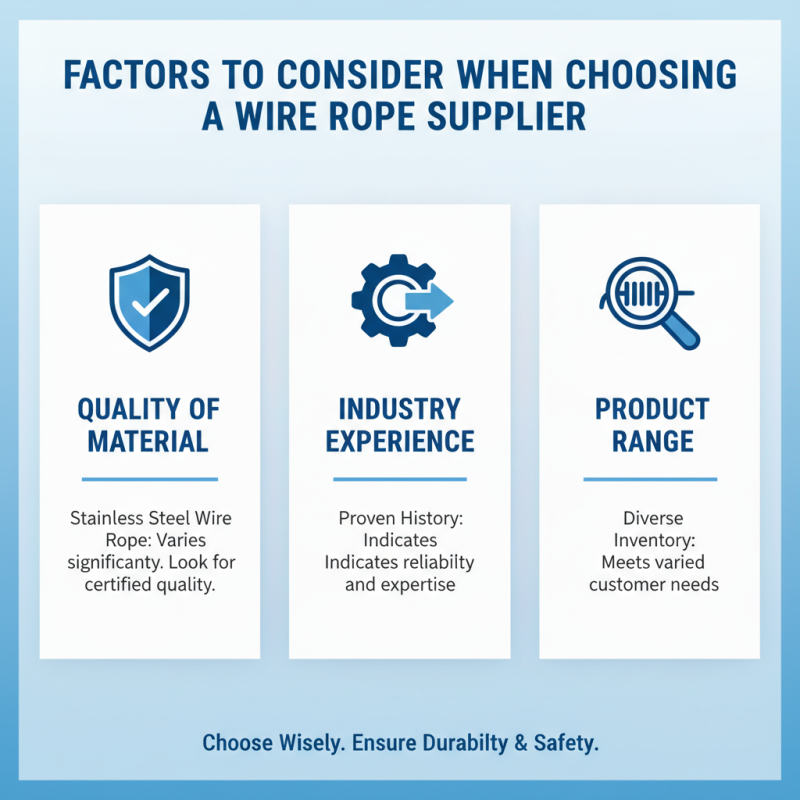
Many professionals still struggle with recognizing a reputable supplier. Factors to consider include quality certification, material sourcing, and customer service. An inexperienced choice can lead to setbacks and increased costs. Hence, reflecting on past experiences can guide future decisions. Reliable stainless steel wire ropes can greatly enhance project outcomes when sourced correctly.
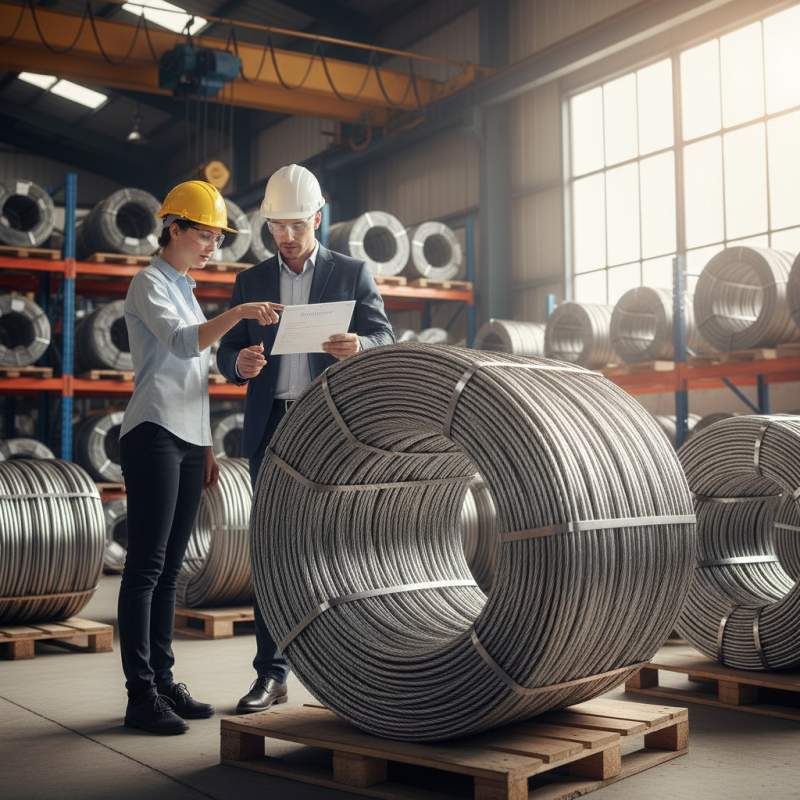
Identifying the Key Features of Quality Stainless Steel Wire Ropes
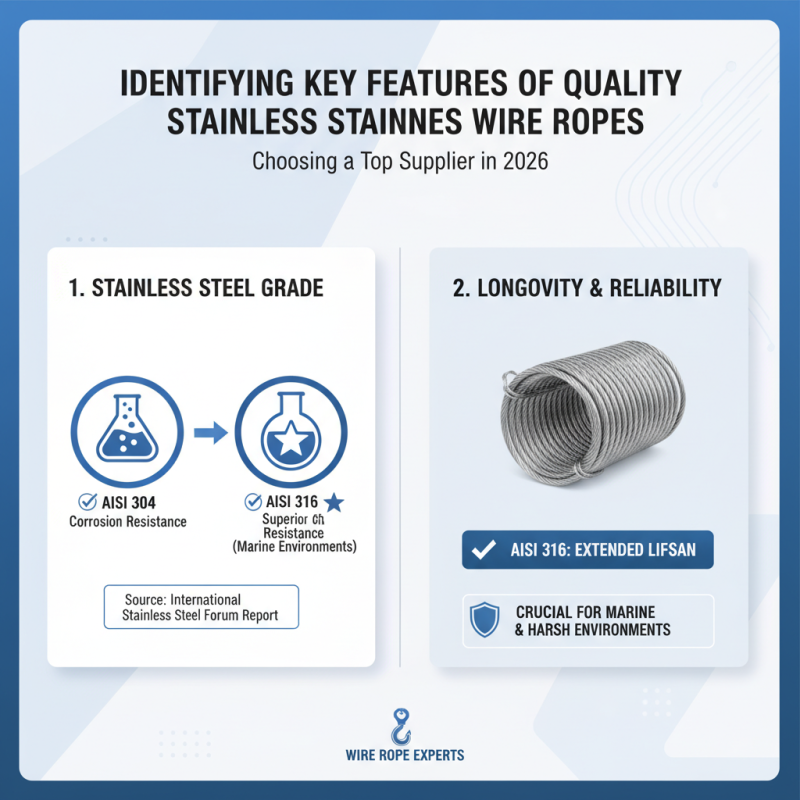
When looking for a top stainless steel wire rope supplier in 2026, it is essential to understand what makes quality ropes stand out. First, the grade of stainless steel used is a vital factor. The most common types are AISI 304 and AISI 316. A report from the International Stainless Steel Forum indicates that AISI 316 offers better corrosion resistance, particularly in marine environments. This can extend the longevity and reliability of wire ropes.
Another key feature is the wire rope construction. Options typically include 7x19 and 1x19 configurations. The 7x19 structure provides enhanced flexibility, while the 1x19 setup is stronger but less flexible, making it suitable for fixed applications. It's important to select the right construction based on intended use. Industry data suggests that flexibility can improve overall handling, which might be a deciding factor in some applications.
**Tips**: Always check tensile strength ratings. A higher strength rating often correlates with better performance under load. Also, verify if the supplier provides certification for quality assurance. This adds an extra layer of reliability. Remember, the right choice can significantly influence project outcomes and safety. Keep in mind that not every wire rope will suit every project. Evaluate specific needs thoroughly before making a decision.
Top Stainless Steel Wire Rope Manufacturers to Watch in 2026
As industries evolve, the demand for high-quality stainless steel wire rope continues to grow. According to recent market analysis, the global stainless steel wire rope market is projected to reach USD 2.4 billion by 2026, expanding at a CAGR of 5.9%. This growth is driven by increased applications in construction, marine, and manufacturing sectors. Companies must keep track of leading manufacturers that are innovating along with these trends.
Several key manufacturers are emerging as frontrunners. Their focus on quality and sustainability is commendable. They utilize state-of-the-art technology to enhance durability and corrosion resistance. Reports indicate that some manufacturers are investing heavily in research and development. However, an over-reliance on technology can cause them to overlook market adaptability. Balancing innovation with customer needs can be a challenge for these suppliers.
Additionally, the supply chain remains a critical aspect. Some manufacturers face issues sourcing raw materials, leading to inconsistencies. An industry report highlighted that 83% of companies encountered supply chain disruptions last year. This factor can impact product availability and pricing. The ability to maintain quality while addressing these challenges is essential for long-term success. Industry observers are keenly watching how these leading manufacturers respond to evolving market conditions.
Top Stainless Steel Wire Rope Suppliers Market Share Analysis for 2026
Innovative Trends in Stainless Steel Wire Rope Production for 2026
The stainless steel wire rope industry is experiencing innovative trends heading into 2026. One significant shift is the emphasis on sustainability in production processes. Manufacturers are exploring eco-friendly materials and methods. These practices not only reduce waste but also enhance the product’s appeal.
Another trend is the integration of advanced technology in manufacturing. Automation and precision engineering lead to higher quality wires. However, some companies struggle with adapting to these technologies. They face challenges in training their workforce and upgrading old systems. Balancing tradition with innovation requires careful consideration.
Additionally, the demand for customized solutions is rising. Clients seek ropes tailored to specific needs. This trend pushes suppliers to be more flexible and responsive. Some may falter in delivering quick turnaround times. Finding the right balance between efficiency and quality remains complex. As the industry evolves, ongoing reflection on these processes is vital for success.
Top Stainless Steel Wire Rope Supplier for 2026 Needs
| Dimension |
Wire Rope Type |
Breaking Strength (kN) |
Diameter (mm) |
Production Innovations |
| 7x19 |
Standard |
50 |
6 |
Enhanced corrosion resistance |
| 7x7 |
Standard |
40 |
8 |
Lighter weight for easy handling |
| 1x19 |
Heavy Duty |
60 |
10 |
Improved tensile strength |
| 6x36 |
Special Purpose |
90 |
12 |
Higher flexibility with durability |
| 6x19 |
Standard |
70 |
9 |
Coating for enhanced protection |
Sustainability Practices in the Stainless Steel Wire Rope Industry
Sustainability is becoming crucial in the stainless steel wire rope industry. Many suppliers are now focusing on reducing their environmental impact. Reports show that steel production contributes about 7% of global carbon emissions. This statistic highlights the urgency to innovate and adopt sustainable practices.
Recycling stainless steel is an essential part of sustainability. The recycling process can save up to 75% of energy compared to producing new steel. In 2021, over 60% of stainless steel was recycled. This trend favors suppliers who prioritize eco-friendly practices. They can reduce waste and lower production costs while meeting market demands.
Another area of focus is the sourcing of raw materials. Organizations promoting ethical mining practices help ensure that materials are obtained responsibly. Yet, challenges remain. Not all suppliers adhere to these standards, leading to inconsistencies in the industry. Transparency is vital. Consumers demand to know where their products come from and how they are made. The pressure on suppliers to improve their sustainability practices is growing exponentially.