How to Choose the Right Lifting Hook for Your Needs?
Choosing the right lifting hook can be a daunting task. The market offers a variety of options, each with unique features. A lifting hook is essential for ensuring safety and efficiency in lifting operations.
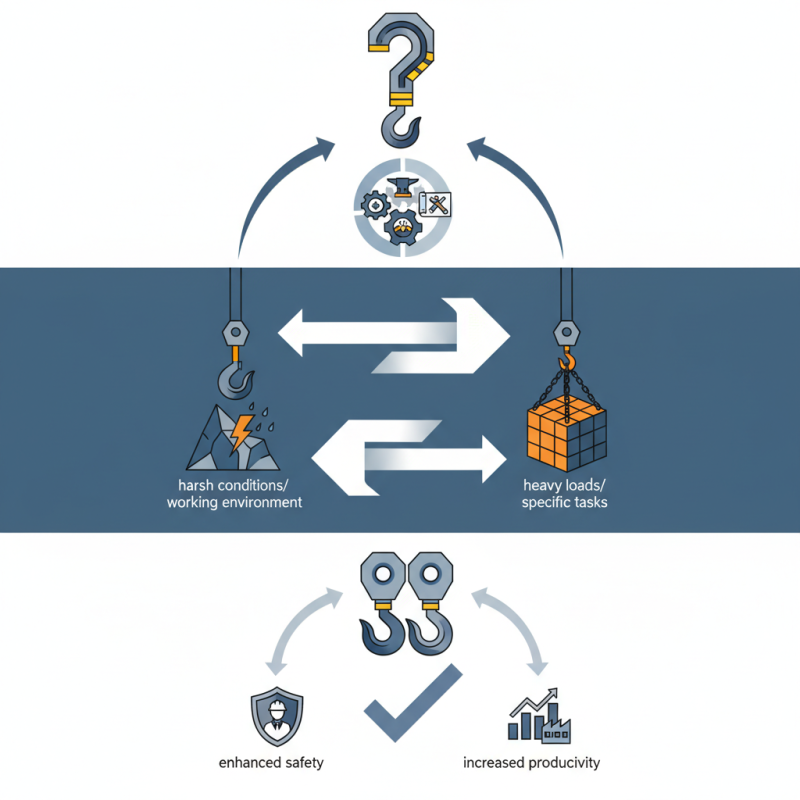
You need to consider load capacity, material, and design when selecting a lifting hook. Different applications require different types of hooks. Some hooks might not be suitable for heavy loads or specific tasks. It's crucial to assess your needs carefully.
Ignoring these details can lead to accidents or equipment failure. Think about the working environment too. Will the lifting hook be exposed to harsh conditions? These factors play a critical role in your decision-making process. Choosing wisely can enhance safety and productivity.
Understanding Different Types of Lifting Hooks and Their Applications
When choosing the right lifting hook, understanding the types available is crucial. There are various hooks, each designed for specific applications. For example, a crane hook is ideal for heavy loads. It has a larger opening to accommodate thick cables. On the other hand, a snatch block hook is perfect for redirecting force. Its design allows for easier maneuvering in tight spaces.
Considerations such as weight capacity and material are essential. Not all hooks are made equal. Steel hooks are durable but can be heavy. Aluminum hooks, while lighter, may not endure extreme loads. Reflecting on this, one might realize that comfort and ease of use matter. A hook that is difficult to handle can lead to mishaps. It’s important to assess the environment where the hook will be used.
Safety should never be overlooked. Inspecting hooks for wear and tear is vital. A seemingly small crack could lead to failure. Sometimes, using what seems like the right hook can turn problematic. Evaluate your needs carefully. Every choice impacts safety and efficiency at work.
Assessing Load Capacity and Safety Factors for Lifting Hooks
When selecting a lifting hook, assessing load capacity is crucial. According to the Occupational Safety and Health Administration (OSHA), the rated load capacity must be clearly marked. This ensures safe lifting operations. Overloading a hook can lead to catastrophic failure. It’s vital that users adhere to these ratings to maintain safety.
Safety factors must also be considered. Industry standards often recommend a safety factor of at least five for lifting hooks. This means the hook should handle five times the expected load. For instance, if a hook is rated at 5 tons, it should not be subjected to loads exceeding 1 ton regularly. Neglecting this can lead to accidents, injuries, and damage to equipment.
Regular inspections should be a routine practice. Worn or damaged hooks should be replaced immediately. A report by the National Institute for Occupational Safety and Health (NIOSH) highlights that 60% of accidents occur due to equipment failure. Additionally, users are responsible for knowing their equipment well. This awareness can prevent many issues. A thorough understanding of both load capacity and safety factors can significantly reduce risks.
Material Considerations: Choosing the Right Hook for Your Environment
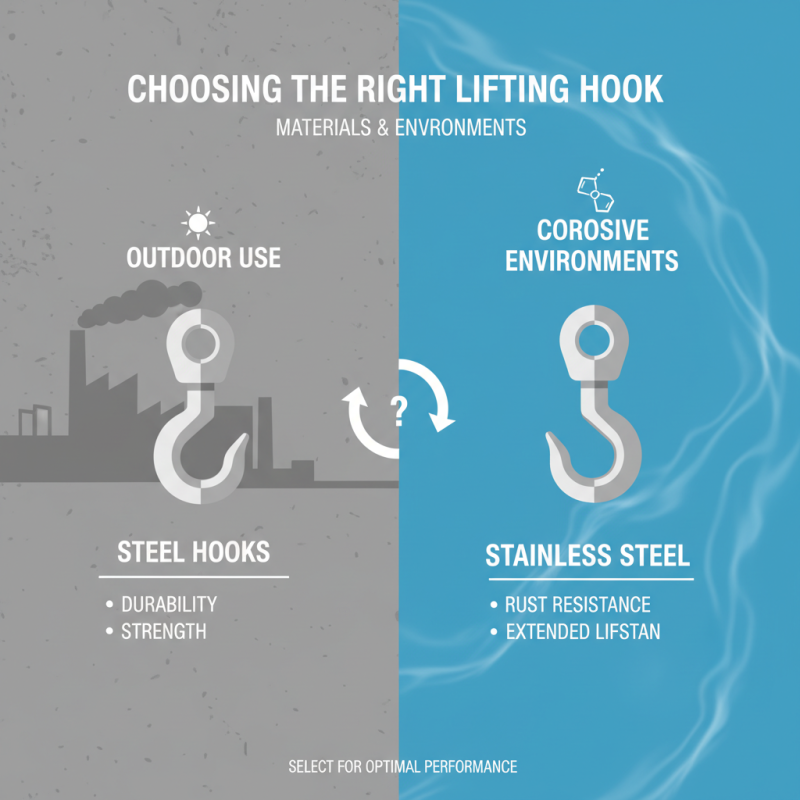
Choosing the right lifting hook requires an understanding of materials and their suitability for different environments. For outdoor use, steel hooks are often preferred due to their durability. However, in corrosive environments, stainless steel is a better option. It resists rust and prolongs the hook's life.
When considering hooks for specific tasks, think about the weight capacity and the material strength. Some hooks may not perform well under high stress. Plastic or polymer hooks can be lightweight, but they may not withstand heavy loads. This mismatch can lead to failures.
Tips: Always inspect your hooks before use. Look for any signs of wear or damage. A simple crack can compromise safety. Additionally, consider the working environment's temperature. Extreme heat or cold can affect hook performance. Ensure you have the right hook for the right job. Mistakes in this area can be costly, both financially and in terms of safety.
Examining Hook Designs and Their Impact on Lifting Efficiency
Selecting the right lifting hook is crucial for safety and efficiency in lifting operations. Various hook designs play a significant role in how effectively loads can be handled. For instance, open hooks often provide versatility but may risk load slippage. In contrast, closed hooks are typically more secure, reducing the chances of accidental detachment during lifting. According to a recent report by the Industrial Lifting Equipment Association, the choice of hook design can influence lifting efficiency by up to 25%.
The impact of the hook's geometry cannot be overstated. Hooks that are specifically engineered to distribute weight evenly can minimize stress on both the hook and the lifting apparatus. Misalignment or improper sizing can lead to premature wear and tear. In fact, a study from the Materials Handling Institute indicates that inefficient hook designs contribute to nearly 30% of equipment failures in lifting operations. Users should also consider the types of loads being lifted, as irregular shapes may require customized hooks to ensure stability.
It’s important to regularly assess your lifting hooks for signs of wear. Inspections should focus on deformation, cracks, and signs of fatigue. When hooks are used beyond their rated capacity, they not only lose efficiency but also pose serious safety risks. Making informed decisions based on the specific lifting context is essential. With the right hook and maintenance, the gains in productivity may far outweigh the costs involved in choosing the right design.
Maintenance and Inspection Guidelines for Lifting Hooks
Lifting hooks are essential tools in various industries. Proper maintenance is crucial to ensure safety and longevity. Regular inspection should become a routine. Look for wear and tear, cracks, or deformation. Even small issues can lead to significant hazards. It’s easy to overlook these details, but neglecting them comes at a cost.
Every time you use a lifting hook, think about its condition. Are you checking it before each lift? A well-maintained hook can perform effectively. An inspection log can help track these checks. Visual cues are vital; ensure the hook is clean. Dirt and grime can hide potential problems. Reflect on your inspection habits. Are they thorough enough?
Consider the load capacity as well. If the hook is overloaded, it can deform quickly. This can happen even when the hook looks fine. Regularly reviewing load limits and usage patterns can prevent accidents. Take a moment to reflect on how often these checks occur. A proactive approach can save lives.
How to Choose the Right Lifting Hook for Your Needs?
This chart illustrates the different types of lifting hooks and their respective load capacities. When choosing a lifting hook, consider the specific application and weight requirements to ensure safety and efficiency in lifting operations.