Why Choose Stainless Steel Turnbuckle for Your Next Project?
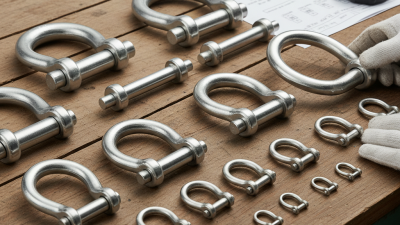
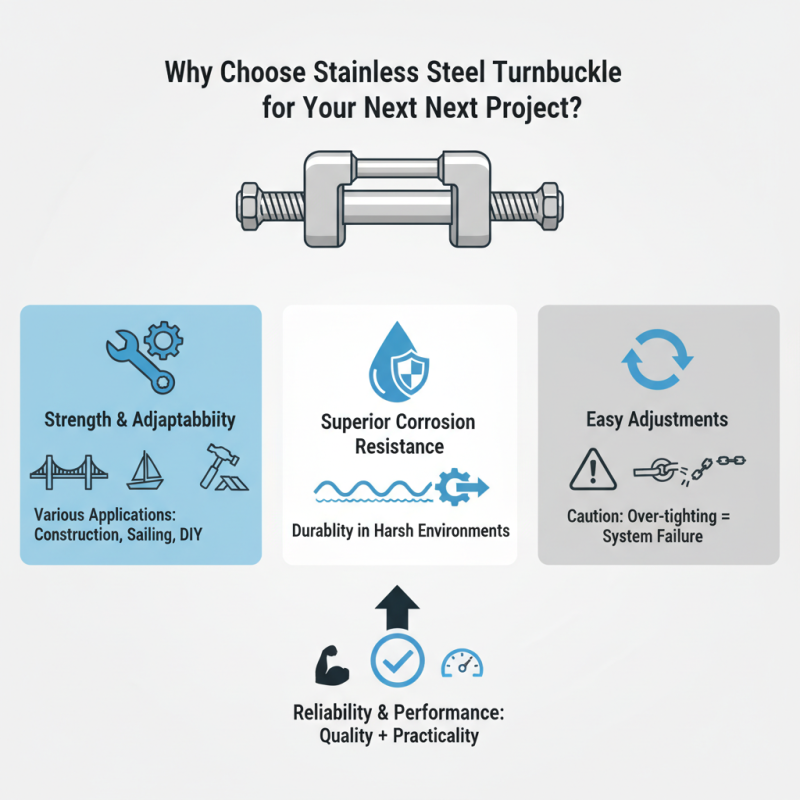
When it comes to choosing hardware for your next project, the decision is crucial. One option that consistently stands out is the stainless steel turnbuckle. This versatile tool provides both strength and adaptability, making it ideal for various applications. Whether you're working on construction, sailing, or DIY projects, a stainless steel turnbuckle can enhance your setup significantly.
Stainless steel offers superior resistance to corrosion, outshining other materials in durability. This quality ensures that your turnbuckle maintains its integrity over time, even in harsh environments. The design of a stainless steel turnbuckle allows for easy adjustments, making it user-friendly. However, one must consider the potential for over-tightening, which can lead to system failure.
Ultimately, investing in a stainless steel turnbuckle means choosing reliability and performance. It’s a decision based on careful evaluation of both your needs and the project's requirements. Emphasizing both quality and practicality, stainless steel turnbuckles are not just accessories; they are essential components that can make or break your project's success.
Benefits of Using Stainless Steel Turnbuckles in Various Applications
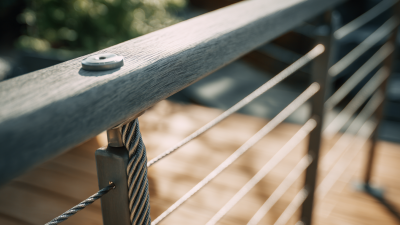
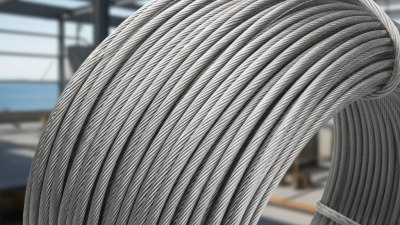
Stainless steel turnbuckles are essential in various applications due to their durability and versatility. These components adjust tension and length in ropes, cables, and other materials. Their resistance to corrosion makes them ideal for outdoor use, from boating to construction. This longevity saves costs in maintenance and replacements over time.
When selecting turnbuckles, ensure they meet your project's requirements. Different sizes and tensile strengths cater to specific needs. Always consider factors like load capacity and environmental conditions. A small mistake in choosing the wrong specifications might lead to unexpected failures. Regular inspections can help identify potential weaknesses.
Tips: Always verify the material certification before purchasing. Choosing the right finish enhances durability and performance. Remember, investing in quality components can prevent costly repairs down the line. Use turnbuckles wisely, and they will serve you well in your projects.
Understanding the Corrosion Resistance of Stainless Steel Turnbuckles
When selecting materials for your next project, consider stainless steel turnbuckles. These components offer exceptional corrosion resistance, making them ideal for various environments. Corrosion can be a significant issue in outdoor applications, especially in coastal or humid areas. Stainless steel's alloy composition strengthens it against rust, ensuring durability and longevity.
Employing stainless steel turnbuckles can reduce maintenance costs over time. Unlike other materials, they do not need frequent replacements. However, it's essential to choose high-quality stainless steel, as not all grades provide the same level of protection. Recognizing the specific environmental conditions your project will face is crucial. Inadequate material selection could lead to unforeseen failures or costly repairs.
While stainless steel turnbuckles are reliable, they are not infallible. Exposure to extreme conditions, such as saltwater, can still affect their integrity over time. Regular inspections and maintenance will help identify any issues early. Emphasizing quality in sourcing and installation can significantly improve performance and safety. Understanding these factors ensures your project remains robust and resilient against corrosion challenges.
Key Factors to Consider When Selecting Stainless Steel Turnbuckles
When selecting stainless steel turnbuckles, several key factors come into play. The material quality is crucial. Stainless steel offers exceptional corrosion resistance, making it ideal for outdoor projects. Look for turnbuckles that contain at least 304 stainless steel for most applications. In more demanding environments, 316 stainless steel may be necessary, especially near saltwater.
Consider the size and load capacity of the turnbuckle. They come in various sizes, and choosing the right one ensures safety and performance. A turnbuckle that is too small may fail under pressure, while one that is excessively large can be cumbersome. Evaluate the specific needs of your project to find the best fit.
Tip: Always check the manufacturer's specifications for load ratings. This information is vital. It prevents accidents and ensures long-lasting performance.
It is also wise to assess the turnbuckle's design. There are different types, including open body and closed body designs. Each one has its advantages. Open body designs allow for easier adjustments, while closed body types offer increased stability. Reflecting on the project conditions will guide your choice here.
Comparing Stainless Steel Turnbuckles to Other Material Options
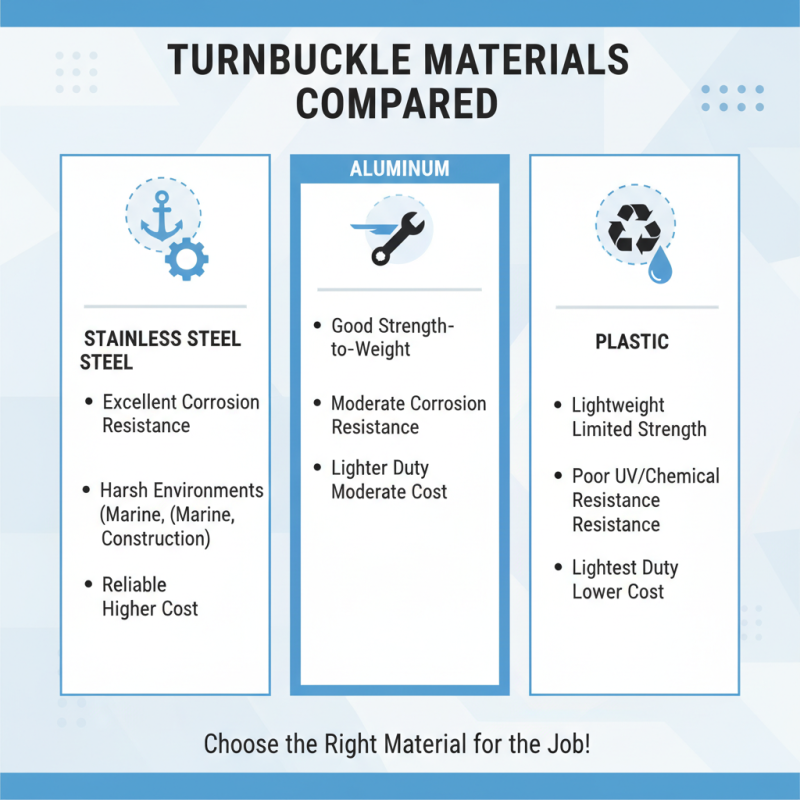
When considering materials for turnbuckles, stainless steel stands out for several reasons. It excels in durability and corrosion resistance. Compared to aluminum and plastic options, stainless steel can endure harsh environments. Whether it's in marine settings or construction projects, it offers unmatched reliability. However, it’s essential to remember that with increased durability comes higher costs.
Tips: Always assess your project needs. Consider the environment where the turnbuckle will be used. Each material has its strengths. Aluminum might be lighter but lacks corrosion resistance. Plastic can be affordable but is not as sturdy. Weigh these factors carefully.
Selecting the right turnbuckle is crucial. Stainless steel provides security and longevity but may not be the best choice for every situation. If weight is a critical factor, aluminum could be a viable alternative. Yet, understand its limitations in terms of strength and lifespan. A balanced approach ensures you choose the right material for your specific project demands.
Best Practices for Installation and Maintenance of Stainless Steel Turnbuckles
When installing stainless steel turnbuckles, it's crucial to follow certain best practices. Start by ensuring that the turnbuckle is the right size for your project. An oversized or undersized turnbuckle may lead to structural failures. Check the load capacity to avoid underestimating the tension needed. Tightening them too much can damage the components, while too little may not provide sufficient support.
Proper maintenance is key to prolonging the lifespan of your turnbuckles. Regularly inspect them for signs of wear, corrosion, or loosening. Dirt or debris can affect their performance. Cleaning with mild soap and water helps maintain their appearance and function. It’s wise to lubricate the threads and pivots to enhance movement and prevent rust. Remember, even with the best materials, neglecting maintenance can lead to unexpected failures.
Keep in mind that installation locations can affect performance. Environments with high moisture may require additional measures to prevent rust. Always consult guidelines to determine the best practices for your specific conditions. Each project presents unique challenges and learning opportunities. Embrace these moments to grow your knowledge and improve your installation approach.